
Biagio Betti (1535 - 1605)
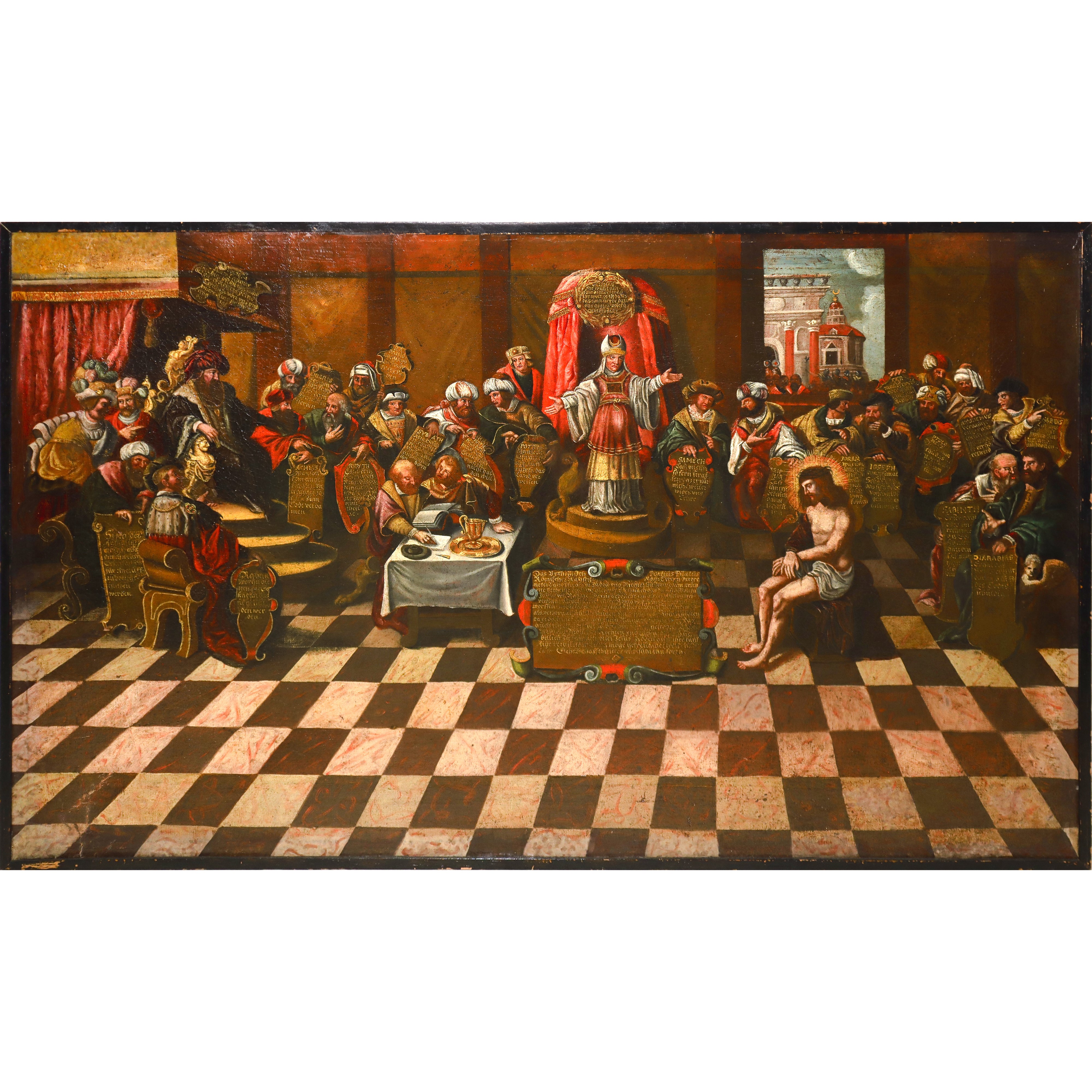
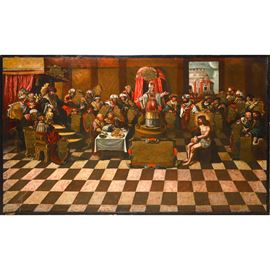
Jesus tried before the Sanhedrin
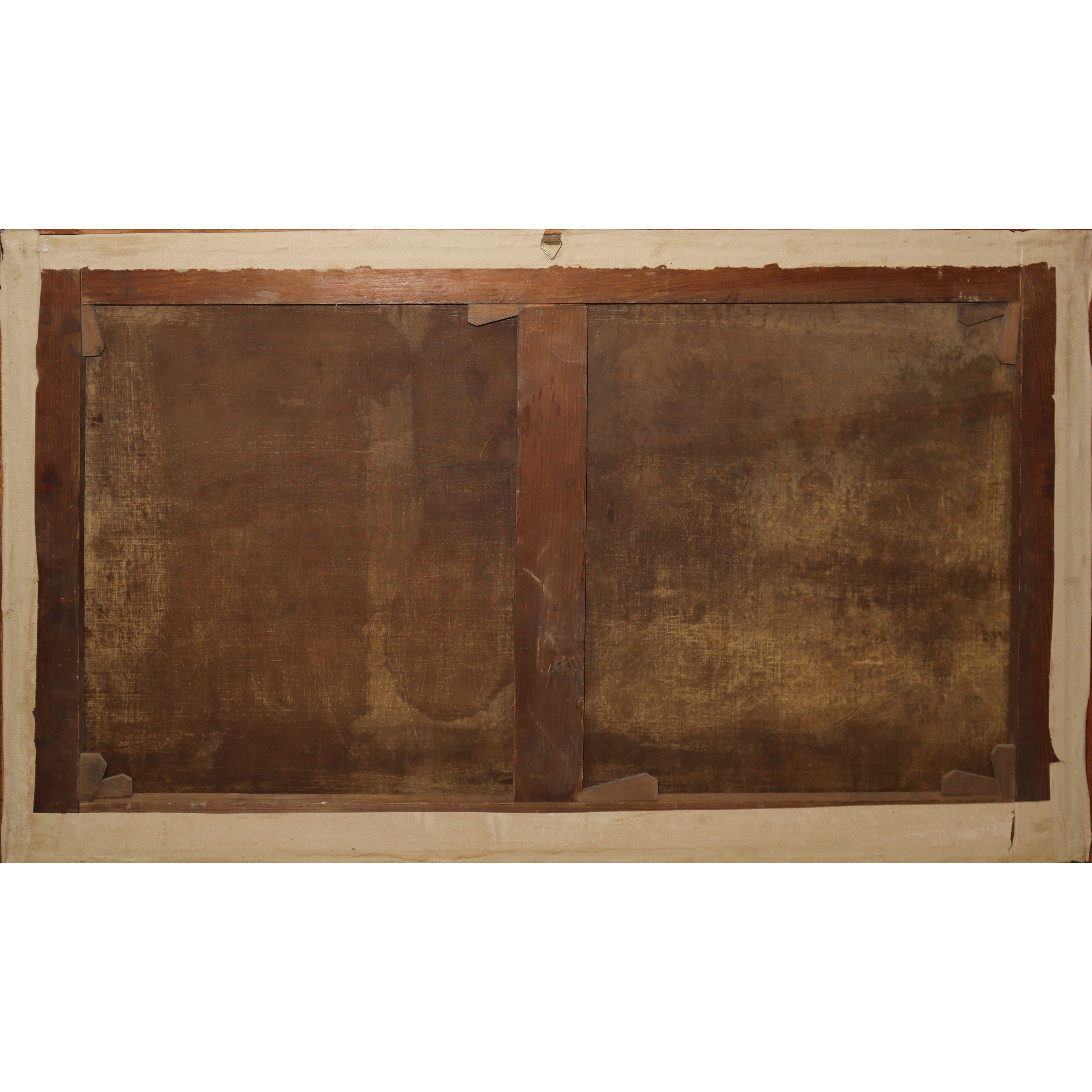
Without frame.
Biagio Betti was a student of Daniele da Volterra, a lay friar of the Theatine order. An eclectic figure, he was in contact with the Roman and French art worlds. He was familiar with the engravings of Dürer, who influenced his compositions. Stylistically, he represents a late Roman Mannerism from the late 16th century.
ASOR Studio
Expert report by Professor Claudio Strinati
Biagio Betti (Cutigliano ca. 1545 - Rome 1615) Jesus being interrogated in the Sanhedrin (oil on canvas 64 x 104 cm)
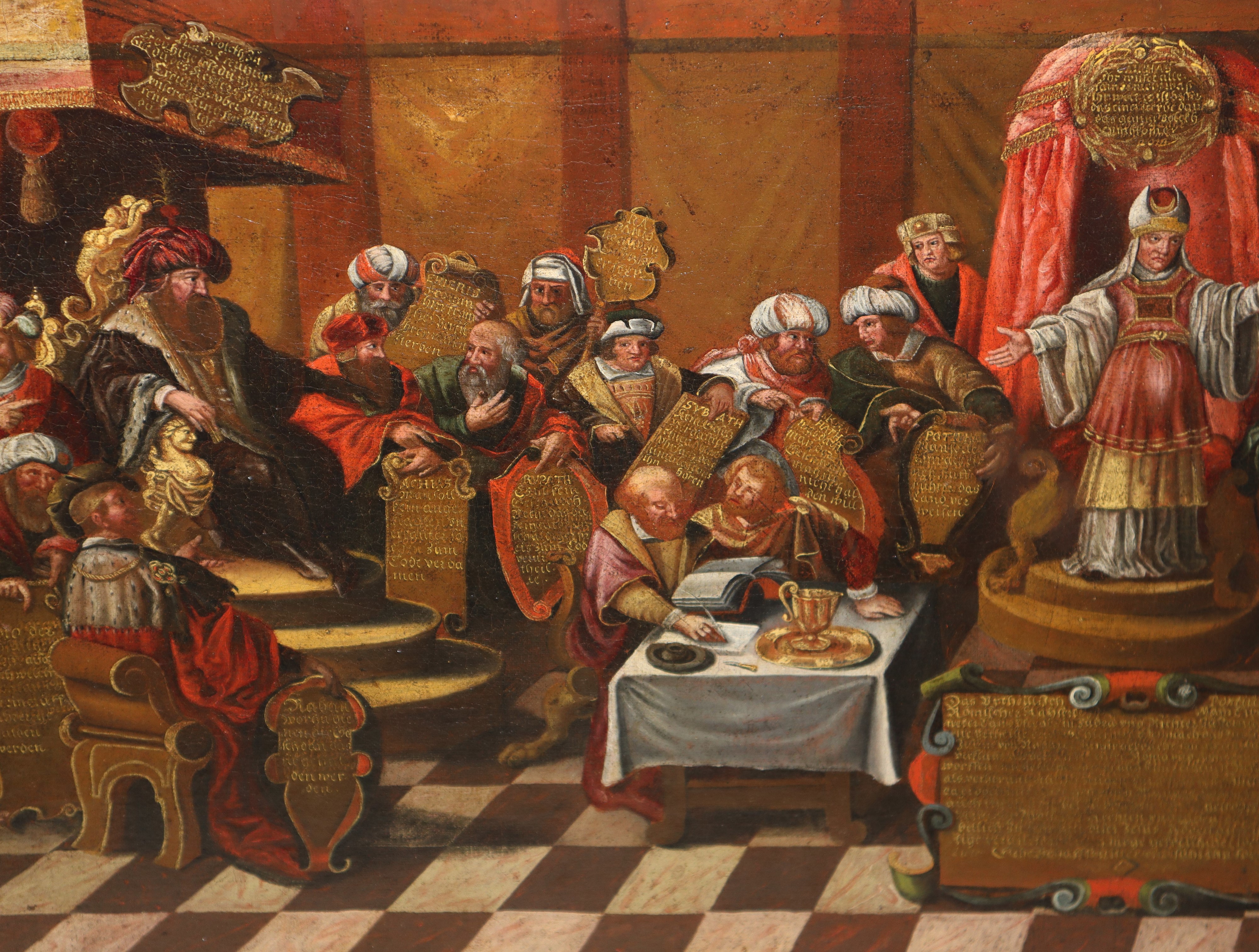
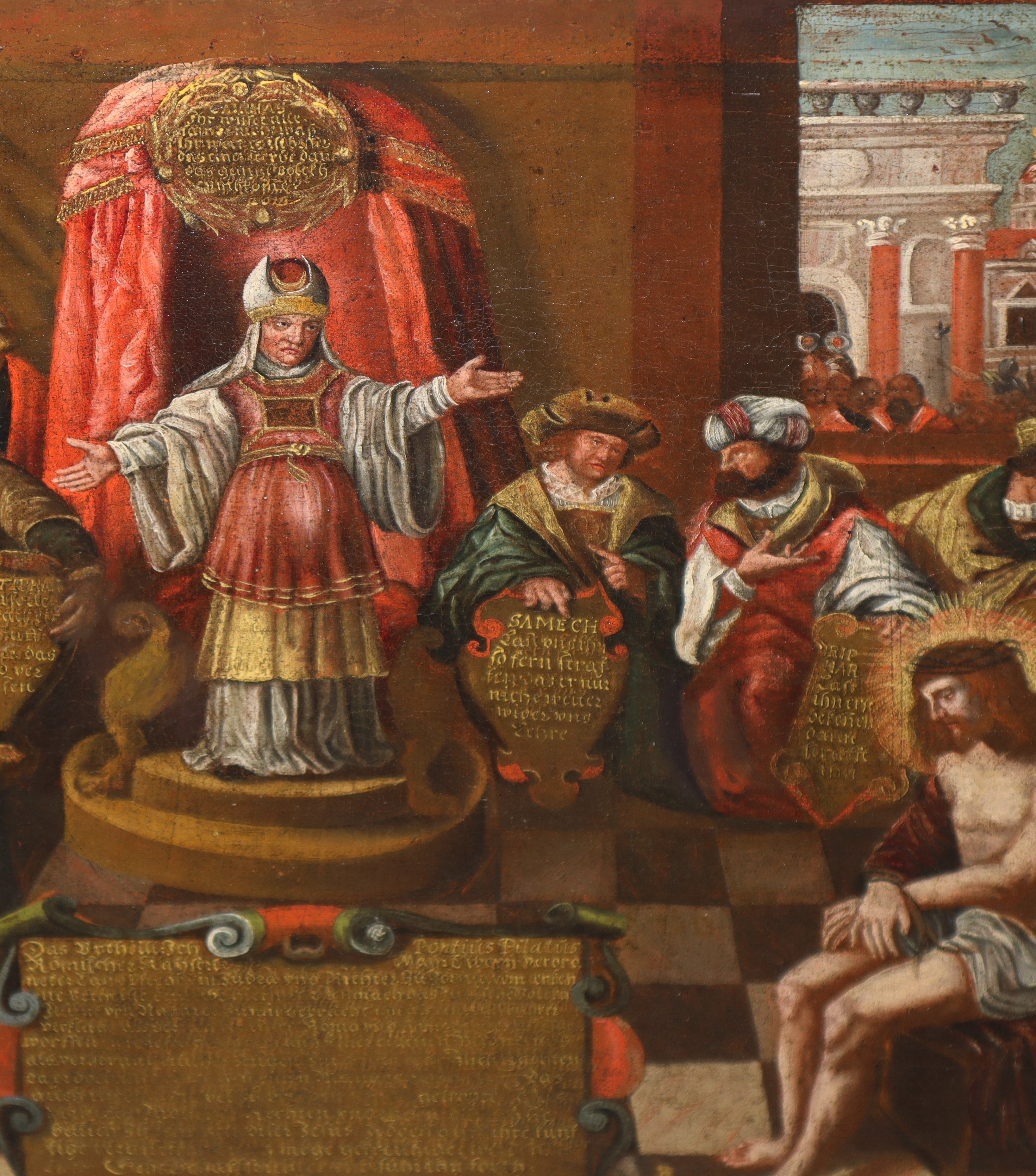
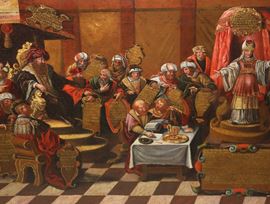
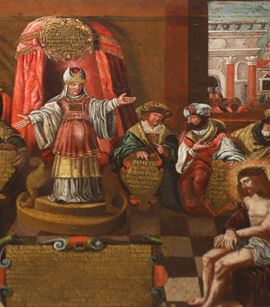
The painting represents the crucial moment in the story of the Passion of Christ when the Redeemer is brought, after the Capture in the Garden of Gethsemane, to the Sanhedrin, that is, the Jewish court administered by the Sadducees and Pharisees, to be interrogated about his alleged sins and subsequently condemned, even though the actual sentence was pronounced by Pilate.
The scene is executed, in our painting, with remarkable pictorial skill and refinement, with an impeccable and rigorous style in the definition of perspective and a rather synthetic and summary style of the figures, as if the author of the work were primarily a specialized miniaturist capable of devoting all his knowledge to the analytical definition of the images, accentuating the different states of mind, from the sorrowful sadness of Christ to the bureaucratic arrogance of the high priests who appear in great numbers in the painting and were in fact, according to ancient sources, around seventy and all very combative.
Our painting, for strictly stylistic reasons, seems to date to the late sixteenth century and fits precisely into that milieu of miniature painting that included notable Italian and Flemish exponents of the time. Among these, a painter who was also an eminent cleric, the Theatine Father Biagio Betti, stands out. Giovanni Baglione wrote a comprehensive and scholarly biography of him, describing him as a cultured, authoritative figure, highly influential in the debate on religious art, and a skilled painter, sculptor, and illuminator himself.
In this biography (published in his book Le Vite de' pittori, scultori e architetti, Rome
1642 (now in the modern edition edited by Barbara Agosti and Patrizia Tosini, Officina
Libraria 2023, vol 1, p.632 ff.) the theological intent is evident and primarily
doctrinal of the works executed by the painter from Chieti, but with a formidable attention
to the intrinsic quality of the paintings and to the iconographic originality. Of the works cited by
Baglione few survive today, but enough to attribute the painting to Biagio Betti
here under examination. In fact, in the church of San Silvestro al Quirinale in Rome there is a
large canvas, certainly autographed by this artist, depicting The Disputation of Jesus
with the Doctors (similar subject, though different, to that of the work here
which, unlike our painting, is a true altarpiece modeled, from an iconographic point of view, on Dürer's prints, which were much studied and well-known at the time of Betti. And the setting of our painting is similar, therefore attributable to the
Betti's argument is also supported by a direct comparison with the aforementioned Disputation, which demonstrates a similar "Nordic" style, albeit on a monumental scale. Our painting, however, is, as noted, entirely miniature. Baglione, moreover, clearly states that the painter Biagio Betti "was equally a miniaturist, both on parchment and in everything else, and he used exquisite colors." This seems to be the case with our painting, a remarkable example of miniature painting of great intrinsic significance and finely crafted quality, still clearly perceptible today despite some conservation issues the work must have had, but which in no way detract from its appreciation and subsequent critical judgment.
I believe it is possible that this painting of ours was executed in conjunction with the Jubilee celebrations of the year 1600 when Father Biagio Betti was at the height of his career and his fame as an authoritative miniaturist and painter.
A painting, therefore, remarkable from the historical-artistic and also from the doctrinal point of view, to which I attribute a considerable value of E. 25,000.00
Sincerely,
Claudio Strinati