
84
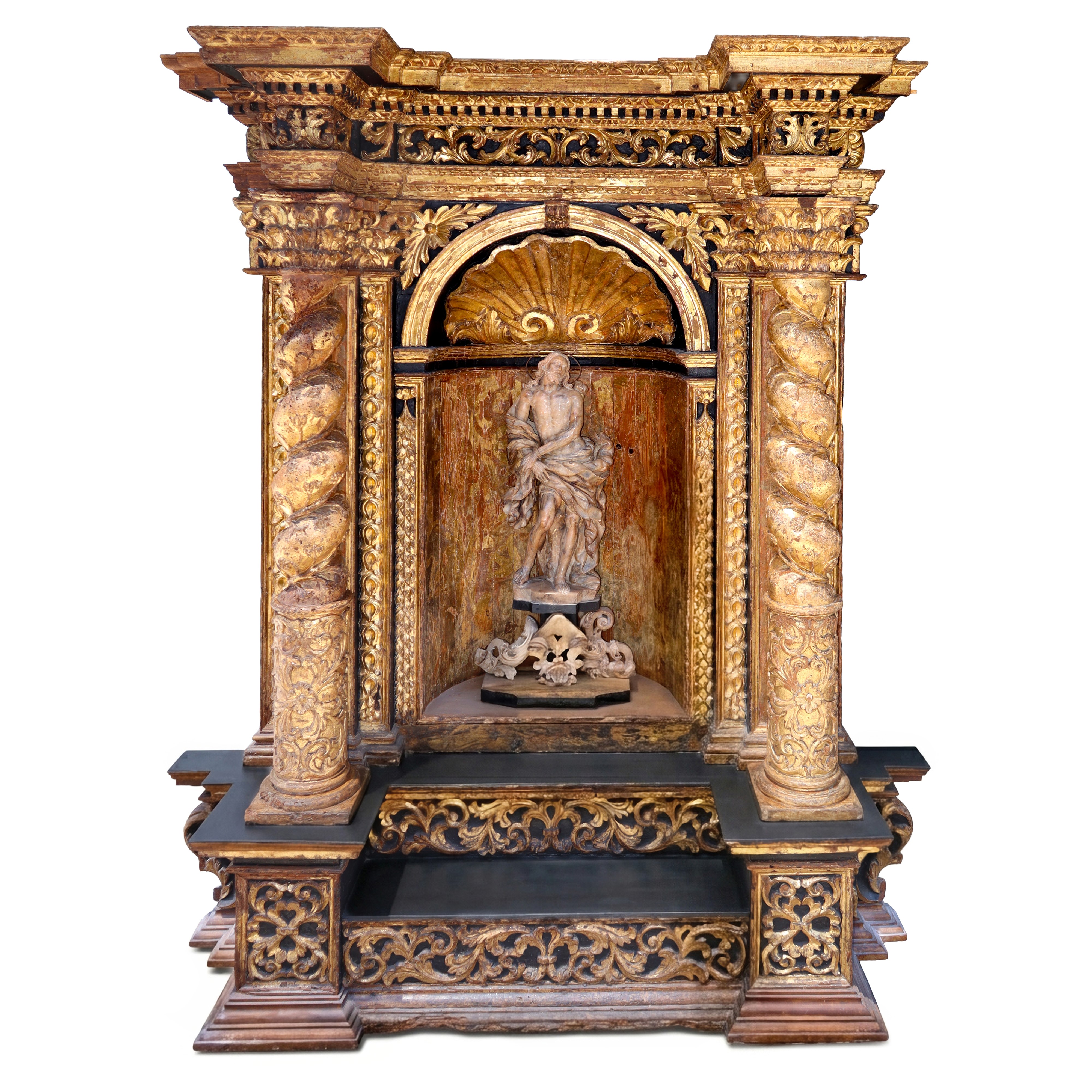
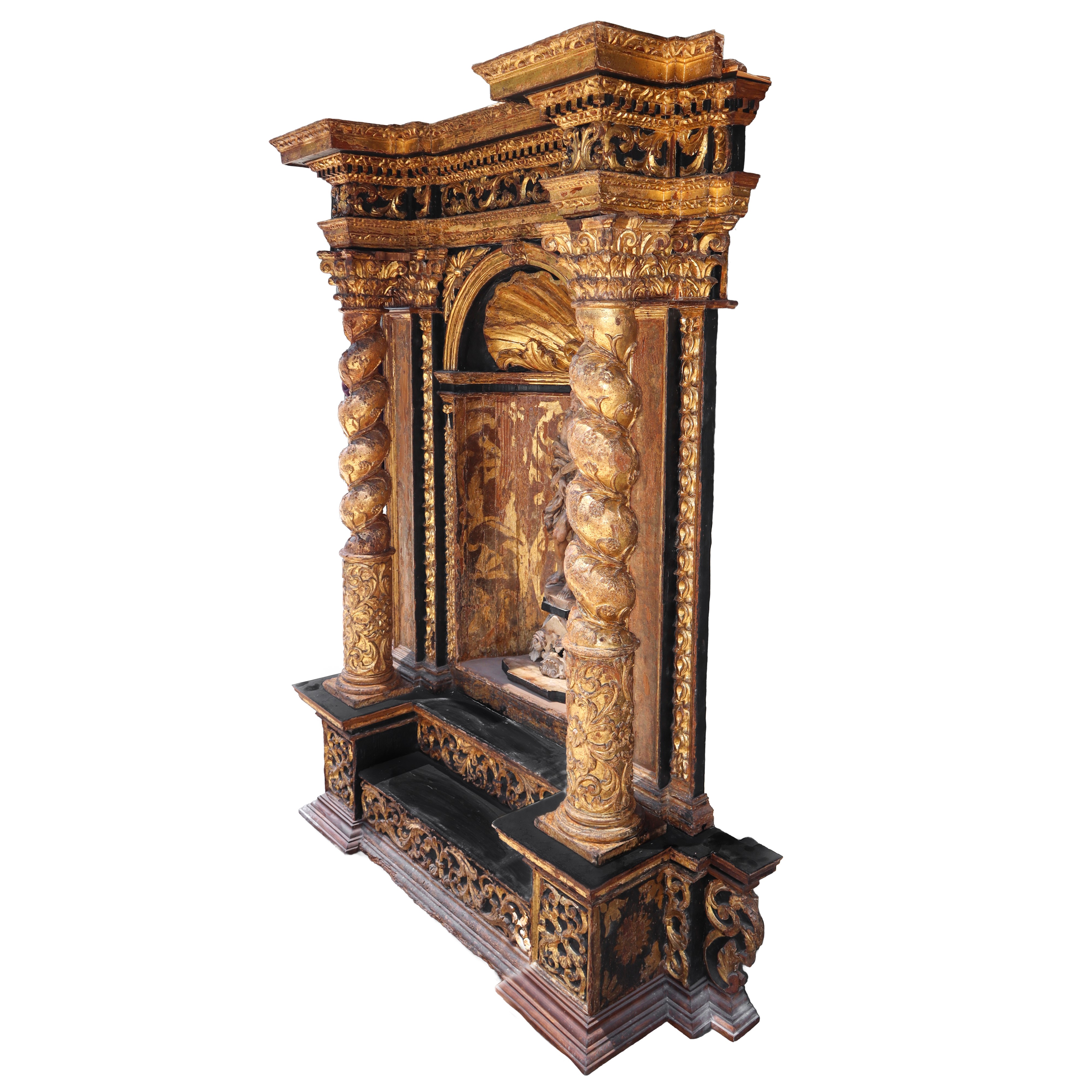
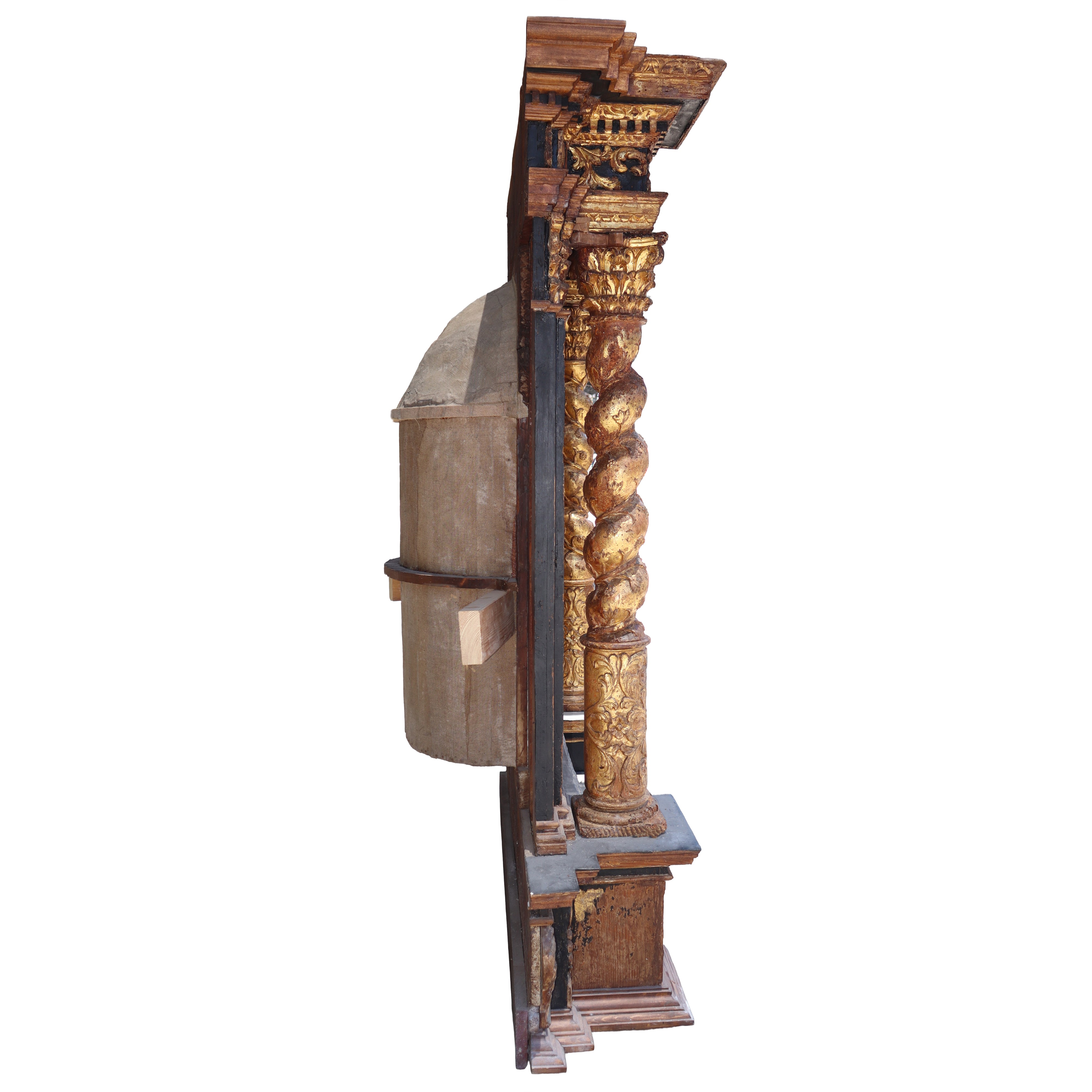
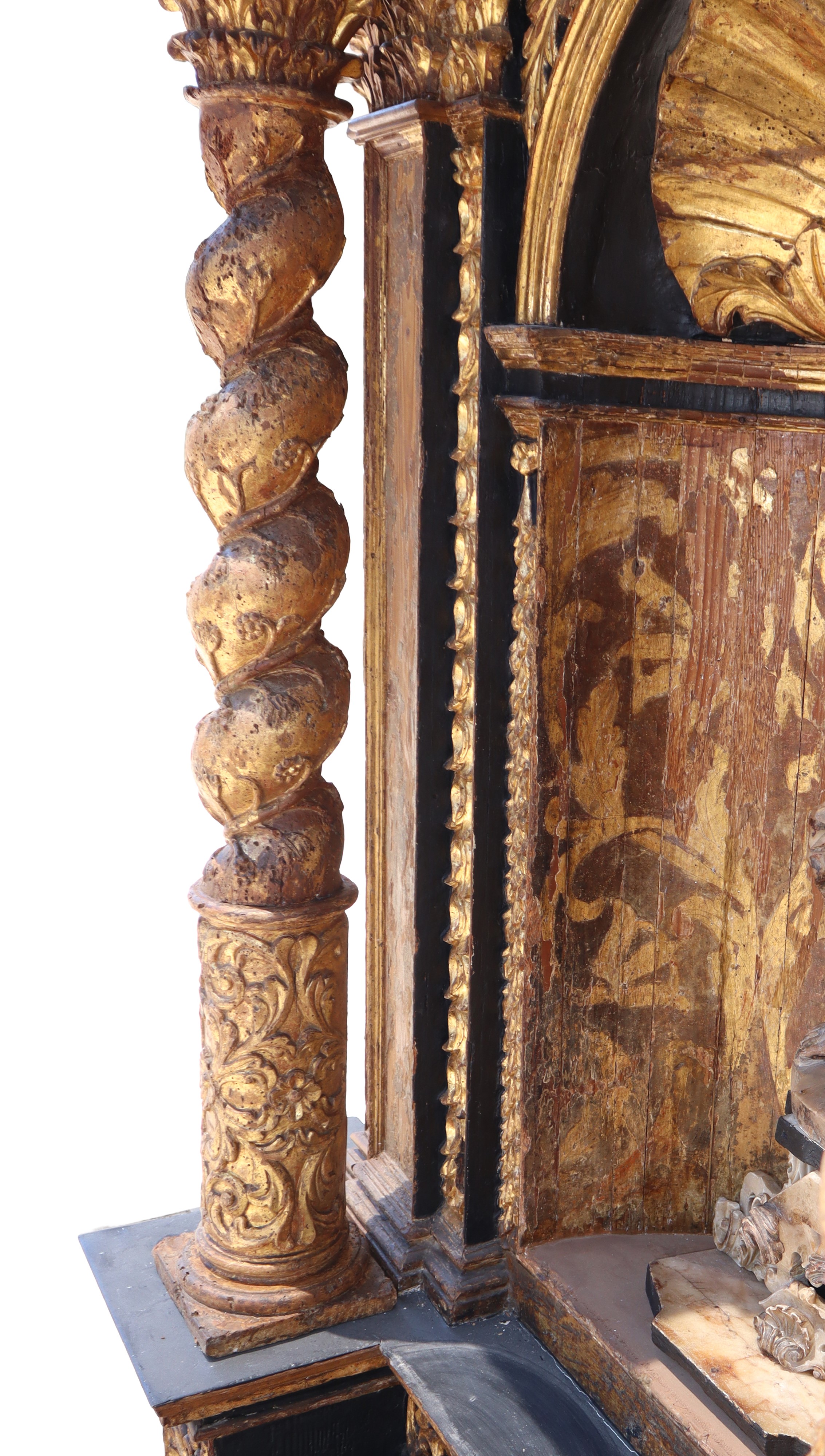
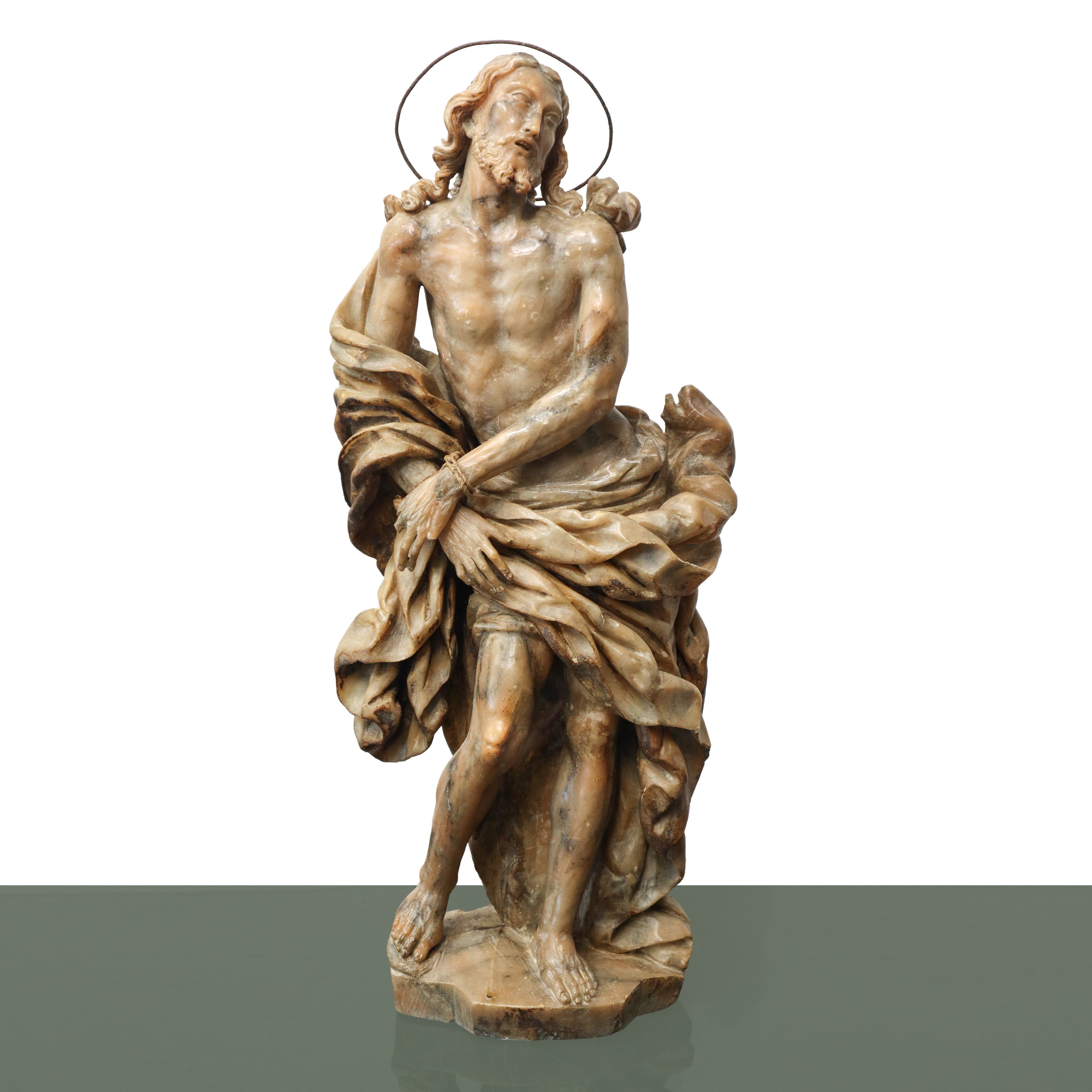
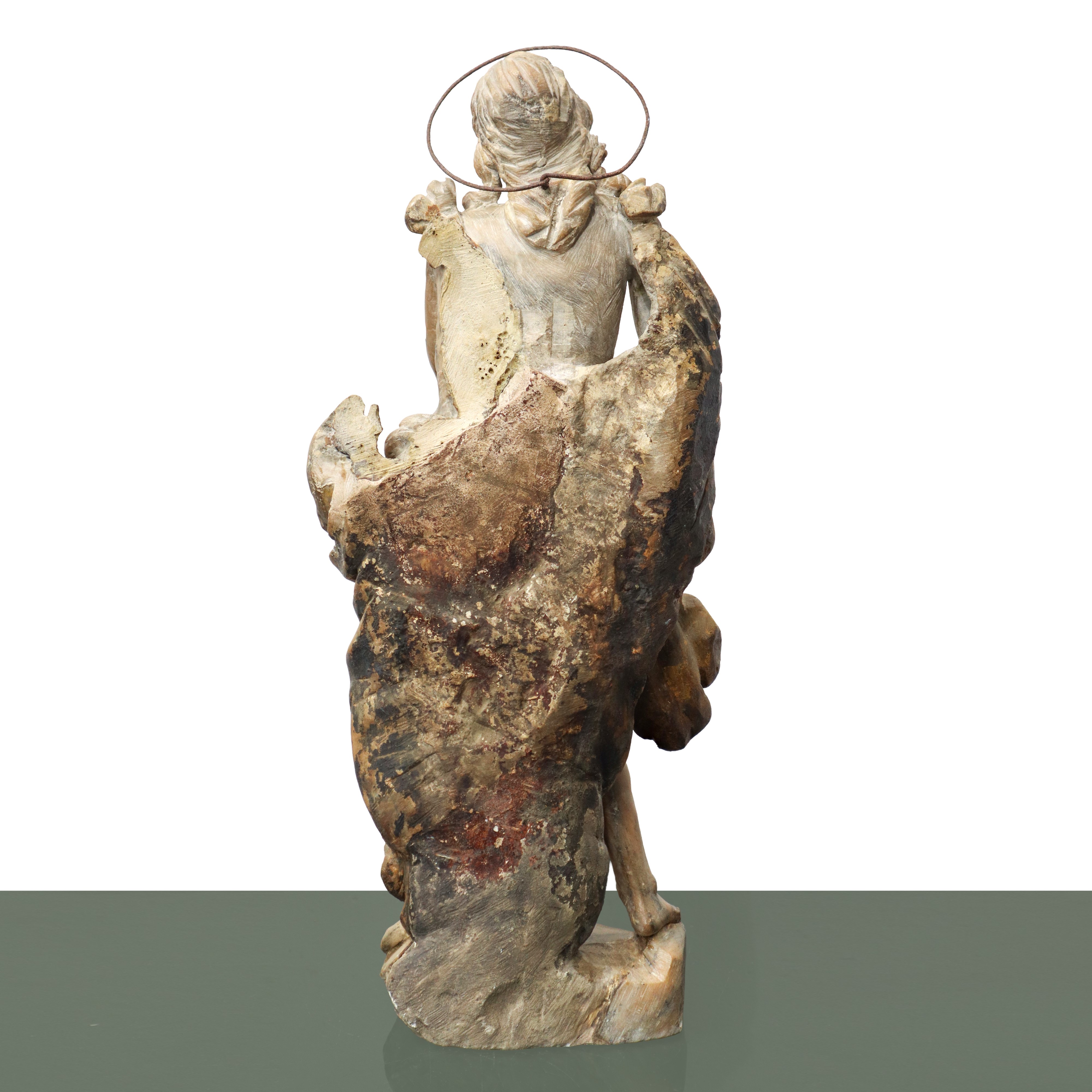
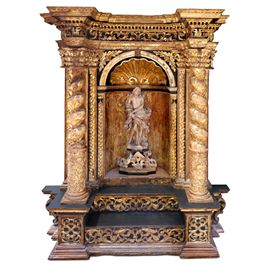
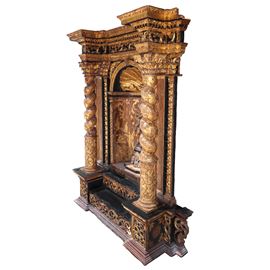
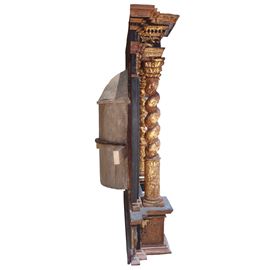
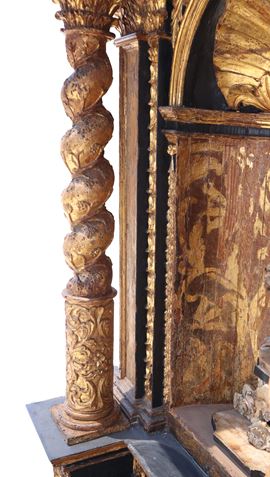
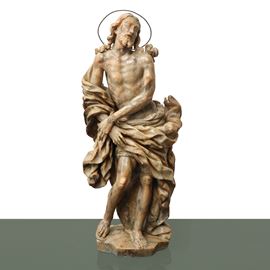
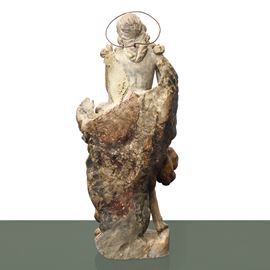
Gilded and lacquered wooden altar with a statue of Christ in pink alabaster from Trapani, First half of the 18th century.
Altar: h cm 185x145x68 Christ in alabaster: h cm 56 Base of the statue of Christ: h cm 21
The wooden altar has undergone restoration and additions. The statue is missing three fingers from the left hand; the base decoration is also missing.
The sculpture, a finely crafted Christ at the Column, is a testament to the exceptional craftsmanship displayed by the Trapani workshops between the 17th and 18th centuries. This period saw the peak of the crafting of "pietra incarnata," a particular type of alabaster with pinkish hues that, precisely because of its hues, was ideally suited to the depiction of scenes rich in pathos and highly realistic depictions. This is the case with our work, in which the already excellent modeling is enriched with minute anatomical details and subtle veining brought to life by the livid iridescence of the stone. The drapery, rendered according to the canons of the late Baroque, is also virtuosic and vibrant. As for attribution, the work is certainly attributed to Giacomo Tartaglia or, alternatively, to the slightly later work of Andrea Tipa.
The sculpture, a finely crafted Christ at the Column, is a testament to the exceptional craftsmanship displayed by the Trapani workshops between the 17th and 18th centuries. This period saw the peak of the crafting of "pietra incarnata," a particular type of alabaster with pinkish hues that, precisely because of its hues, was ideally suited to the depiction of scenes rich in pathos and highly realistic depictions. This is the case with our work, in which the already excellent modeling is enriched with minute anatomical details and subtle veining brought to life by the livid iridescence of the stone. The drapery, rendered according to the canons of the late Baroque, is also virtuosic and vibrant. As for attribution, the work is certainly attributed to Giacomo Tartaglia or, alternatively, to the slightly later work of Andrea Tipa.
€ 16.000,00
Starting price
Unsold