
15
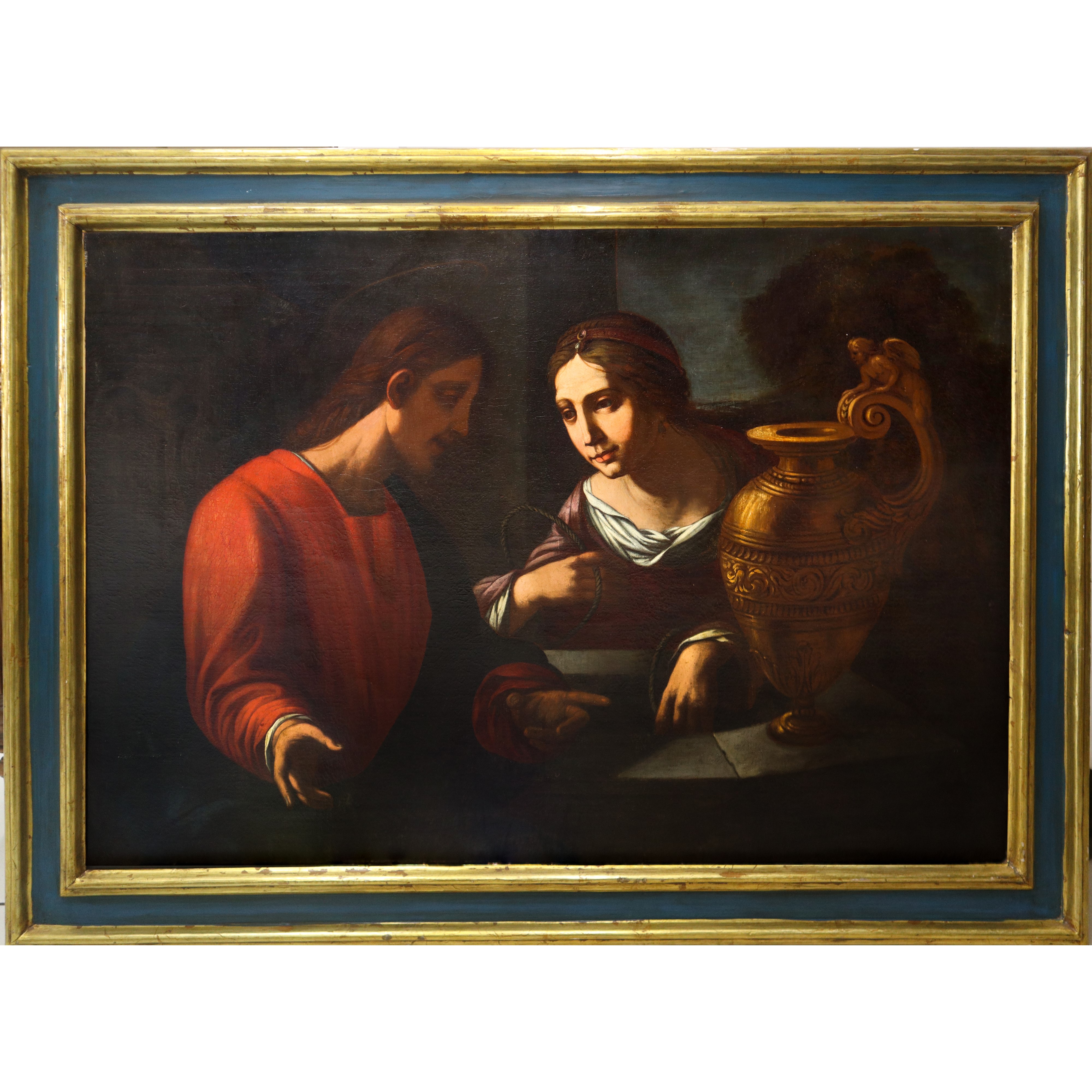
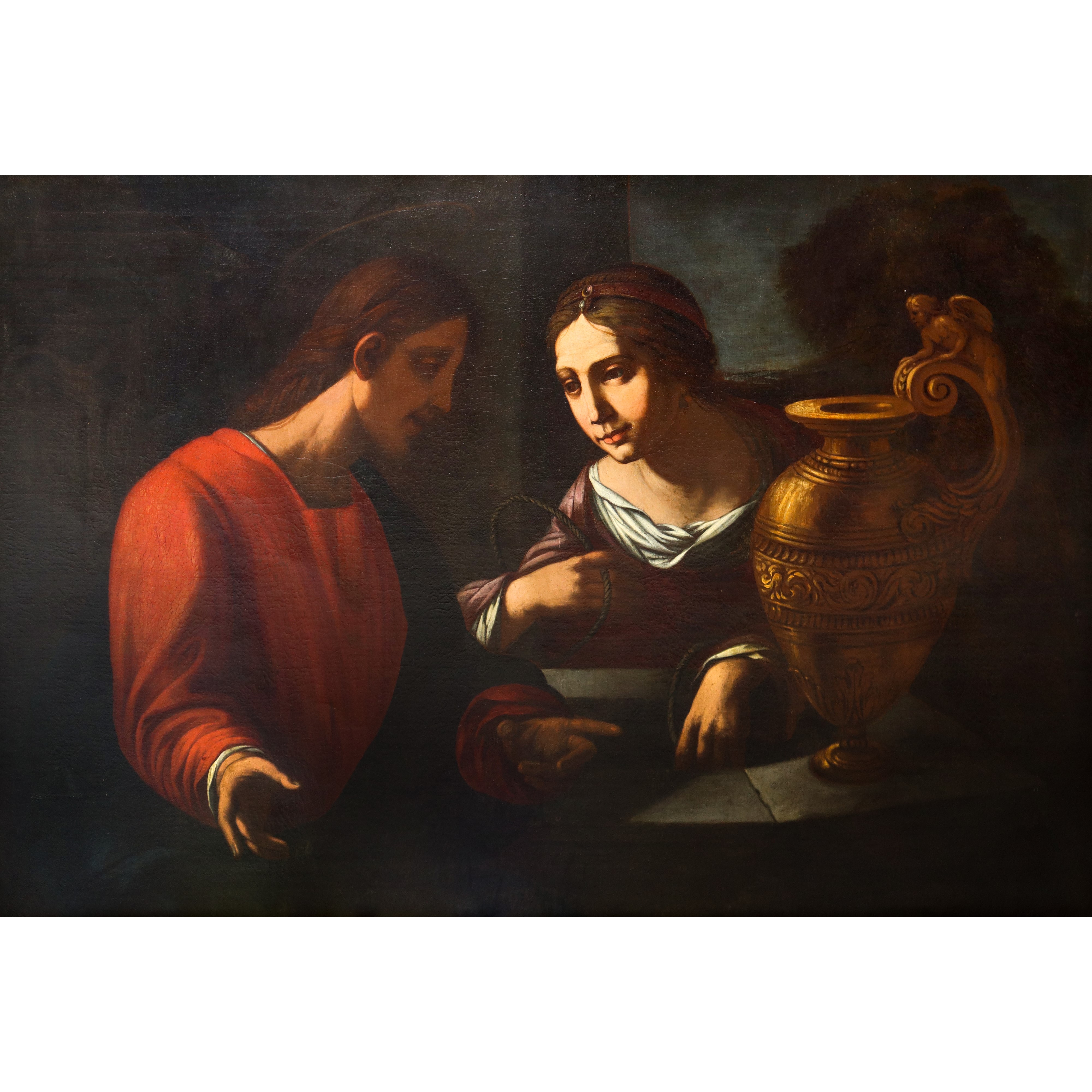
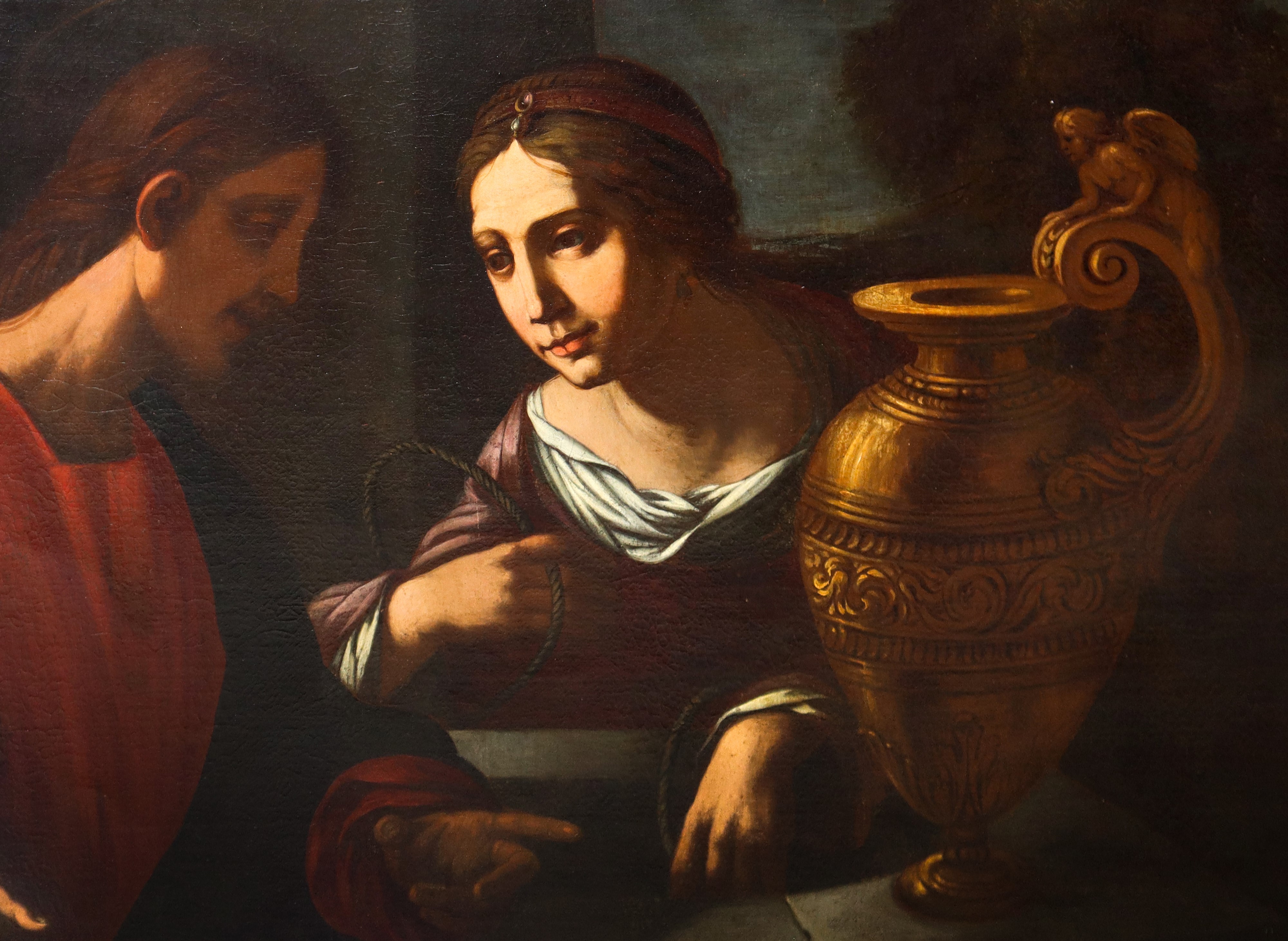
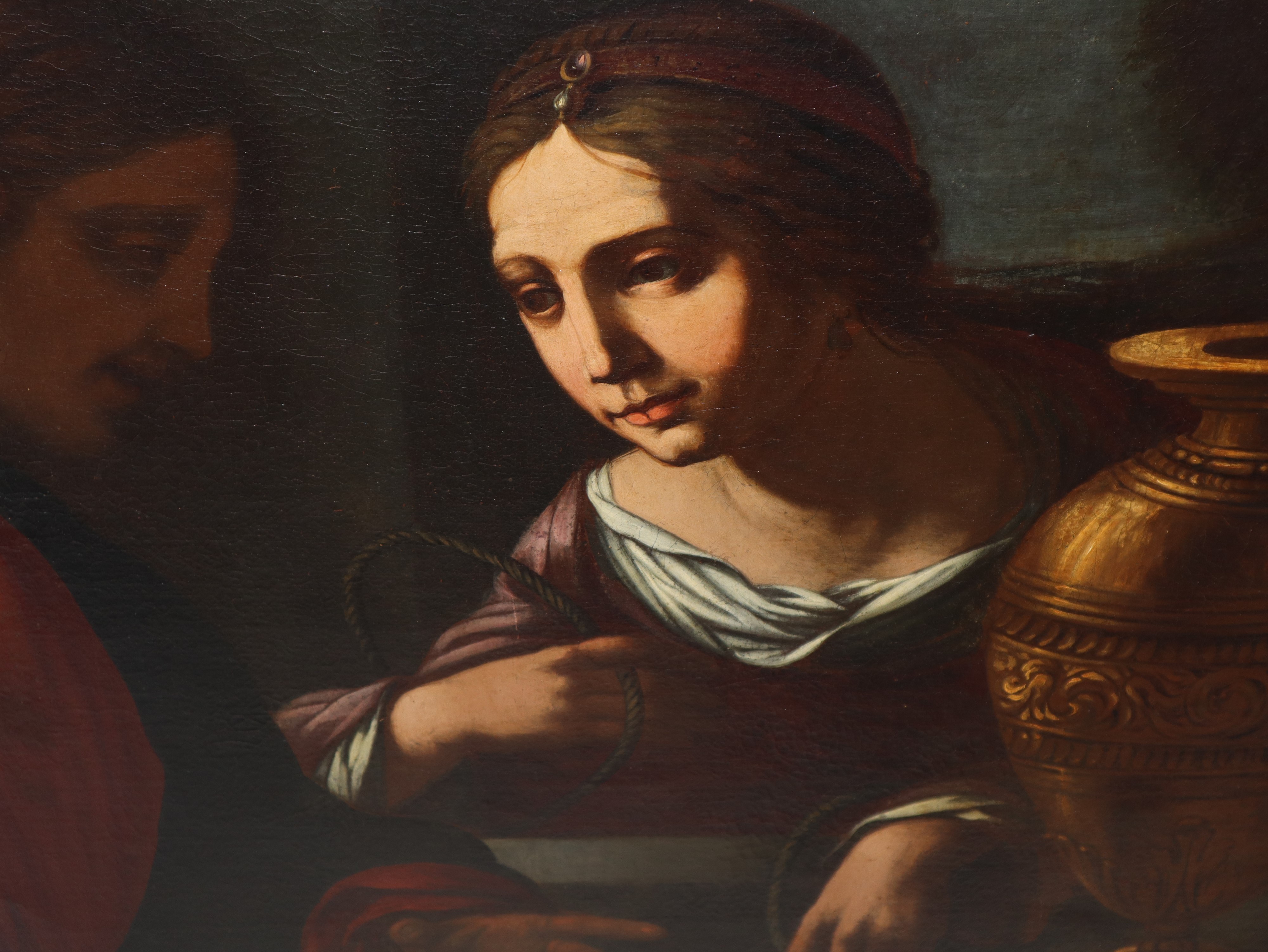
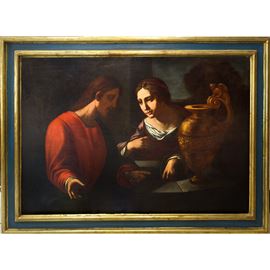
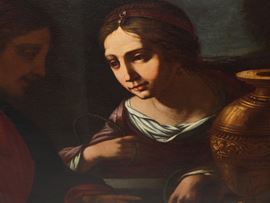
Jesus and the Samaritan woman at the well, second half of the 17th century
Oil on canvas
h 89X130 cm in frame h 110.5X150 cm
The work depicts the episode from the "Story of the Samaritan Woman" taken from the Gospel of John (4:1-42) in which Christ, stopping at a well in the city of Sychar, reveals his divine nature to a Samaritan woman. Throughout the history of art, the subject has been adapted several times by important Italian and European artists: famous, in this regard, are the paintings of Annibale Carracci, Artemisia Gentileschi, Juan de Flandes and others. Also popular were the two versions formulated by Guercino, who, first around 1620 and then in 1647, developed the iconographic model later adopted by our painter: this is characterised by a balanced framing of the depicted figures which, covering the entire pictorial space, are depicted from the waist up, accentuating the expressive value of faces and gestures. Unlike the prototypes, however, the large, decorated jug in the foreground also plays a significant role in the compositional economy of our painting. This solid jug contrasts with the two figures. Precisely because of the iconographic structure, as well as, of course, the pictorial-drawing style, the painting's current authorship can be attributed to an Anonymous Emilian artist from the late 17th century.
€ 2.500,00
Starting price
Unsold